



Zin Tunisian Olive Oil Platform
ZinToop
منصة الزين لزيت الزيتون التونسي
Latest Articles
The Ultimate B2B Sourcing Marketplace for Tunisian Olive Oil: Suppliers for Restaurants, Hotels & Supply Chains
For global importers, restaurant owners and hotel procurement managers, finding a reliable Tunisian olive oil supplier is critical. Securing a consistent olive oil supply chain that delivers authentic Extra Virgin Olive Oil (EVOO) at competitive prices can be challenging. ZinToop is here to bridge that gap and revolutionize your B2B sourcing. ZinToop: The Leading Digital Olive Oil Marketplace Boasting a rich catalog of nearly 1,000 products, ZinToop stands as the ultimate hub for olive oil trade. We simplify the sourcing process by bringing the entire Tunisian olive oil ecosystem onto one transparent platform. How ZinToop Benefits B2B Buyers and Supply Chains: Unmatched Sourcing Network: Our platform connects you directly with a wide range of suppliers, from passionate small-scale farmers and advanced oil mills to specialized packaging units and renowned commercial brands. Tailored for HORECA & Importers: Whether you need to buy wholesale olive oil in bulk for your manufacturing needs or premium packaged EVOO for luxury hotels and fine-dining restaurants, you will find exact matches for your specifications. Transparent Pricing: By cutting out unnecessary middlemen, we empower you to negotiate and source directly, ensuring the best possible ROI for your business. Reliable Continuity: With hundreds of verified suppliers active on the platform, we guarantee a stable and uninterrupted supply chain to meet your continuous market demands. Elevate your culinary offerings and streamline your procurement process. Join ZinToop today to partner with the most trusted olive oil suppliers in Tunisia and source world-class EVOO directly from the origin.
Your Ultimate Guide to Registering Your Olive Oil Brand in Tunisia (From Bulk to Global)
Tunisian olive oil is recognized among the best in the world. However, many farmers and mill owners lose a significant portion of their profits by selling their oil in bulk (Vrac). The radical solution to increase the value of your product and protect it from middlemen is to create your own brand. Many believe that registering a trademark requires complex procedures and a massive budget, but the truth is quite the opposite. Here are the practical and legal steps to register your brand in Tunisia, along with the exact costs involved. Step 1: Choosing and Verifying the Name Success starts with a catchy, memorable name that reflects the authenticity of your product. However, before finalizing your choice, you must ensure it is legally available. You can initially check global databases like WIPO. For full legal protection in Tunisia, the National Institute for Standardization and Industrial Property (INNORPI) conducts a prior art search (Recherche d'antériorité). The fee for this search is set at 36.700 TND (and can reach up to 70 TND for in-depth or multi-class searches). Step 2: Logo Design Your trademark is your signature, and it must be protected. The logo is the first thing an international buyer sees, so it must be highly professional. Legally, when registering, you must provide copies of the logo not exceeding 10 cm in length and 6 cm in width. (Note: Designing a visual identity for olive oil requires expertise in export standards and label design. If you are looking for excellence, our platform provides comprehensive design services tailored for global markets). Step 3: Preparing the Registration File To register your brand, INNORPI requires the following documents: 3 identical copies of the brand logo. A receipt proving payment of the deposit fees to INNORPI. A list specifying the products or services for which the brand will be used. A copy of the National Register of Enterprises (RNE) for the manager, or a power of attorney if someone else is representing you. Step 4: Submission and True Costs You can submit your file at the headquarters in Tunis (Cité El Khadhra), or at the regional centers in Sfax (Bejaya Street) and Sousse (Mongi Bali Street). As for the official costs (including all taxes - TTC), they are fixed and very affordable: Filing a trademark (covering one class of products): 596.000 TND. Issuance fee for the registration certificate: 96.200 TND. (An additional fee of only 119.000 TND applies if you wish to add extra product classes at the time of filing). Once the filing is complete, you gain exclusive exploitation rights to your brand, ensuring full legal protection against counterfeiters for 10 full years, a period that can be renewed indefinitely. Are you ready to launch your brand into global markets? 🌍 Moving from standard oil production to owning a premium brand is your most important investment. At ZinToop, we don’t just provide information; we guide you from the initial idea all the way to export. Our team of experts offers a "Comprehensive Registration & Design" service, handling the research, creating a visual identity that meets international standards, and preparing your entire file on your behalf. 👇 Book your consultation now and start your export journey with your own brand: https://zintoop.com/services/pricing
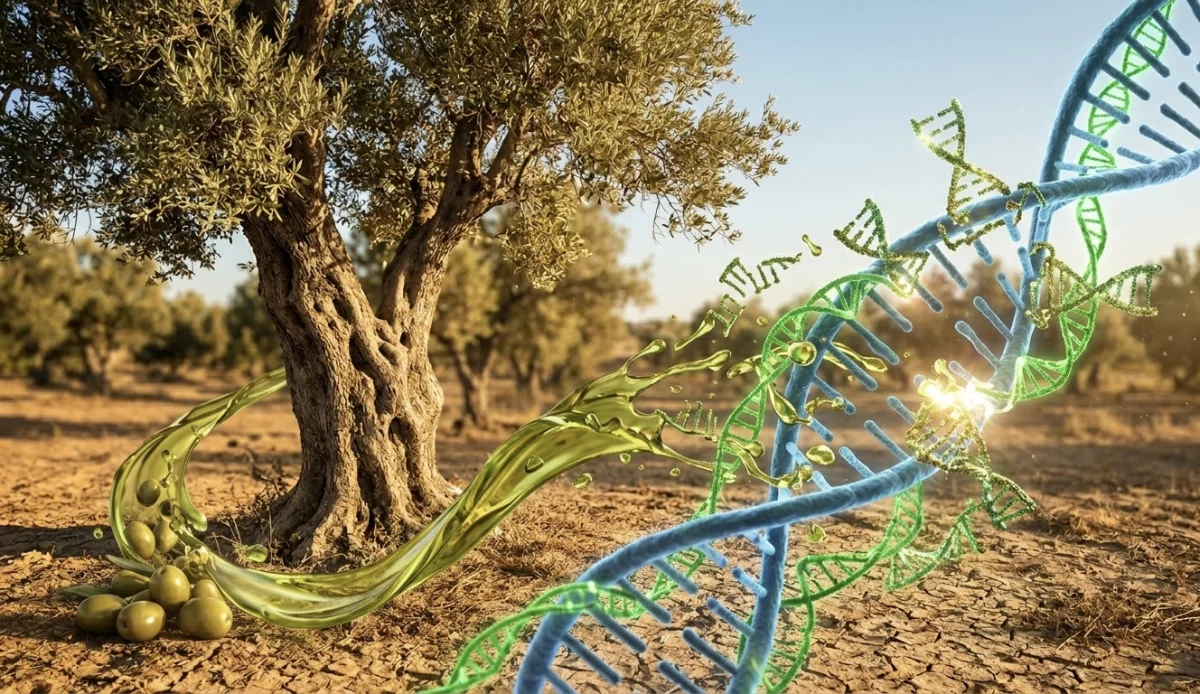
The Discovery That Will Change the Face of Medicine.. How Olive Oil Reprograms Human DNA
Forget everything you learned about calories, healthy fats, and traditional antioxidants. What if science over the past decades was looking at olive oil from the completely wrong angle? What if, when you swallow drops of extra virgin olive oil, you are not just consuming "food", but you are actually "downloading a direct biological update" to your genetic software? This is not science fiction, but the greatest discovery linking epigenetics to the secrets of nature, revealing to us the theory of "Epigenetic Survival Transfer". A theory that shatters the old legacy, and proves that olive oil is in fact a "Data-Carrying Biomolecule" and not just a fatty liquid. Here is the secret that remained hidden inside the cells: 🌳 The tree does not produce oil.. rather it writes a programming "code" Look at the olive tree struggling with harsh drought, dry soil, and burning sun. The tree does not surrender to wilting; rather, it activates its extreme "survival genes". In response to this danger, the tree secretes highly complex chemical compounds such as "Oleocanthal" and "Oleuropein". We used to believe that these compounds are what give the oil its pungent taste and familiar heat, but deep laboratory truth has proven that these molecules are an encrypted "chemical code", carrying within them the complete memory of the tree in conquering death and resisting environmental stress. 🦠 Your intestines are the greatest "decoding unit" When you consume this super oil, your stomach does not treat it as an energy source. Here intervenes an army of trillions of friendly bacteria in your digestive system (the microbiome). These bacteria act as "Bio-Hackers", decoding the phenol compounds and fragmenting them into ultra-fine nanoparticles (like Hydroxytyrosol). These extracted molecules possess a phenomenal ability to cross the Blood-Brain Barrier, and infiltrate directly into the human cellular nucleus. ⚙️ The Human Reboot Here the great scientific shock manifests: these encrypted molecules do not change your DNA; rather, they act as "Epigenetic Switches" that interact with what is known as MicroRNAs. Once attached to the human genome, they execute two highly critical and complex commands: Turn OFF destruction genes: They silence the genes responsible for igniting chronic inflammation, and stop the progression of cellular aging and tissue damage. Turn ON cellular immortality genes: They reawaken dormant genes responsible for self-repair of DNA, stimulate cells to devour their toxins (Autophagy), and build a steel shield that prevents random cellular divisions that cause tumors. 🥇 The conclusion that will change medical references We are facing an amazing biological truth: you do not eat food, you merge with nature. The olive tree faced death and invented an elixir for survival, and when you consume its premium oil, you are actually copying and pasting the "tree's ability for immortality" into your fragile human cells. High-phenol olive oil is not an addition to your meal.. it is a "radical update to the human cellular operating system", and your epigenetic shield against the annihilation of the body.
Your free catalog and guide of Tunisian olive oil producers and brands 🇹🇳
A platform for farmers, millers, and packers to share their products with ZERO fees. Deals made directly between users carry no commissions. We aim to promote and guide buyers to authentic producers.
No results found
Try changing your search or filter criteria
Do you have a product to sell?
Join thousands of sellers and list your product today
Add your listing for free📷 إضافة / تغيير صورة المنتج
اختر صورة واضحة لمنتجك () لجذب المشترين زيادة المبيعات!